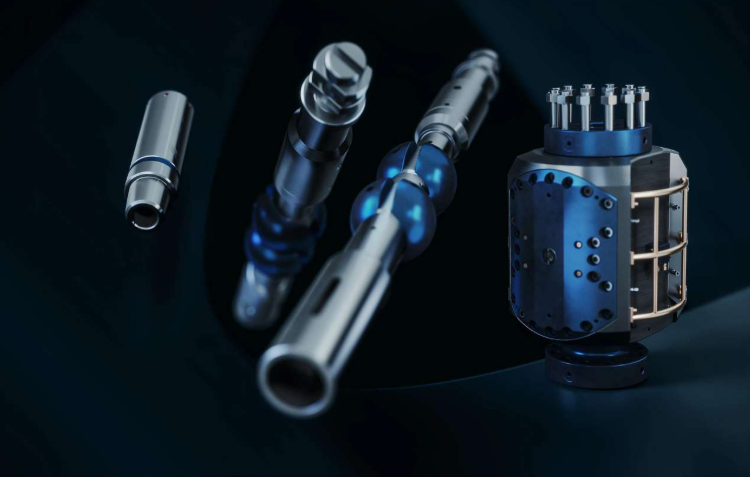
Introduction to Pump Down Perforating
The oil and gas industry has always adapted to changes in demand, whether relating to efficiency, safety protocols, or production levels. An example of this would be pump-down perforating, which is one of the most important modern technologies in well-completion systems. This method helps reduce the time needed to unlock oil and gas reserves while minimizing the disruptions linked with traditional methods. Because of the safety and operational focus of modern industry leaders, this technique has become a preferred choice.
With industries worldwide looking toward more environmentally friendly options, the use of pump-down perforating is likely to increase due to its cost-efficient benefits.
Today’s oilfield industry challenges us to do more than produce—now we have to do smarter production. At the intersection of innovation and reliability, pump-down perforating systems provide flexible solutions to complex offshore wells and even to land-based unconventional plays. These systems can be used to drill new wells, restore value to mature fields, and mitigate the environmental impact during well interventions, underscoring the importance of this technology’s versatility. With tighter regulatory compliance requirements, budget constraints, increased safety expectations, and competition for a global audience, understanding pump-down technology is a must for any competing operator. The blend of effectiveness and speed with safety is a key reason why this method is becoming the new industry standard.
How Pump Down Perforating Works
Pump-down perforating allows well operators to selectively establish communication pathways between the wellbore and the hydrocarbon-bearing formation. The technique utilizes perforating guns equipped with shaped charges that explosively sever the well’s casing and cement sheath. Unlike older techniques where the gun assembly was slowly lowered or dropped to the target depth, pump-down perforating employs high-pressure fluids to swiftly and accurately reach the desired level. This is especially useful in long horizontal wells that would be served poorly, or not at all, by traditional methods of conveyance. Renegade Services have advanced this technique by offering specialized equipment and expertise, ensuring safer, more efficient deployment in increasingly complex well environments.
The process starts with careful planning, where the technical teams model the reservoir and decide where each perforating blast will be placed. On the field, the operators rig up equipment for well control, including blowout preventers and pressure pumps. Fluid is injected into the well to move the wireline or coiled tubing with the perforating guns to the correct position. Sensors both on the surface and downhole provide real-time data so the firearms can be carefully aligned before firing. Once the charges are fired, they explosively cut precise tunnels for the hydrocarbons to flow. This approach, especially when combined with automated safety systems and cross-zone barrier integrity security checks, minimizes risks to personnel and the environment while benefiting from every single shot.
Key Benefits of Pump Down Perforating for Well Completion
Compared to traditional methods, pump-down perforating offers various benefits for both offshore and onshore operations. Most importantly, it accelerates the well-completion process by requiring less time for performing the actual perforations. This has positive financial implications for expensive rigs, as they would incur lower costs and less exposure to accident risks. Furthermore, pump-down perforating helps protect natural reservoir pressures, which maintains production rates and prolongs the well’s life by minimizing the introduction of foreign fluids and killing the well. The differences in these outcomes are more pronounced in horizontal and multi-stage wells that are increasingly common in unconventional shale plays.
Safety is, beyond productivity gains, a key benefit of why operators are shifting toward pump-down perforating. Automation of tasks means fewer workers onsite, which lessens the number of people exposed to hazardous conditions due to the nature of their work. Environmental considerations are also important. As highlighted in recent reports on hydraulic fracturing technology, advances in perforation techniques are associated with reduced chemical usage, lower waste, and more efficient resource utilization. Many operators feel that these changes not only lessen their environmental burden but also simplify and enhance regulatory predictability in jurisdictions across the globe.
Technological Advances Shaping the Process
The change in pump-down perforating is high-paced, and modern advancements are driving technology forward. New perforating guns are being developed to have increased reliability and accuracy while also having the ability to deploy multiple sequential charges. This helps operators increase the value of each well intervention. Modern electronics are embedded within downhole tools to track the parameters of depth, alignment, and pressure in real time. This allows teams to capture critical information for future operations and make adjustments in real time.
Perforating systems can now be operated remotely, and data can be interpreted using AI or machine learning. This is all possible thanks to automation, a technology that continues to drive change. Overall safety and reliability are improved when crews can adjust and monitor operations from a safe distance. From digital technology to smart workflows, advanced perforating systems provide automated techniques that offer real-time diagnostics alongside predictive maintenance, delivering concrete results.
Challenges and Considerations in the Field
While pump-down perforating has its advantages, there are notable challenges as well. The need to transport and maintain equipment in remote geographic regions or offshore locations poses accessibility challenges. Wells with variable wellbore geometries, tight-tolerance casing, or custom engineering solutions also add to the workload of a project. Pressure differences, fluid compatibility, unpredictable reservoir characteristics, and other complications can affect the precise placement and deployment of perforations.
High-level human factors also come into play, such as the shortage of a skilled workforce able to handle complex machinery, read real-time data, and integrate workflows during design and execution. Defined protocols coupled with comprehensive safety drills and rapid-response contingency planning add the essential safety net. Logistical constraints, weather extremities, and other human workload stressors frequently test the resiliency of equipment. To counter these challenges, teams depend on defined iterative project management processes and advanced training to adapt to changes in technology and field conditions, alongside maintaining operational standards.
Best Practices for Operators
- Comprehensive pre-job modeling and scenario planning are needed for each well’s unique geology and operational context to ensure a successful start.
- Detonation Precision: Ensure gun positioning and confirmation pre- and post-detonation with real-time, acoustic, and gamma-ray logs.
- Employ remote monitoring and automation as a priority to protect workers and increase productivity.
- Establish detailed contingency plans with necessary backup equipment, secondary systems, and emergency shutdown procedures in place to proactively manage unexpected events.
- Maintain rigorous operational standards by enforcing regular staff briefings covering safety, compliance, and operational skills.
Teams can reduce risk and optimize the well completion process by incorporating extensive pre-job planning into every phase of the operation, utilizing all advantages of pump-down perforating.
The Future of Well Completion: Trends to Watch
As innovations continue, emerging technologies promise dynamic competition that facilitates growth. Materials science is delivering lighter and more durable perforating tools, while advances in computer modeling are making it easier to predict and enhance performance. Meanwhile, predictive and performance-enhancing computer modeling continues to improve. Additionally, companies aim to lower emissions and use biodegradable perforating fluids to meet environmental policies and stakeholder expectations.
Digital integration is becoming a must, especially with the need for streamlined data transfer for design, execution, and post-job analytics on a single platform. This creates a new standard for transparency, adaptability, and traceability. With the ongoing evolution of pump-down perforating, these trends will continue to set the benchmark for thriving completions, reinforcing operational ability to fulfill global demand for energy while controlling risks and promoting sustainability.